

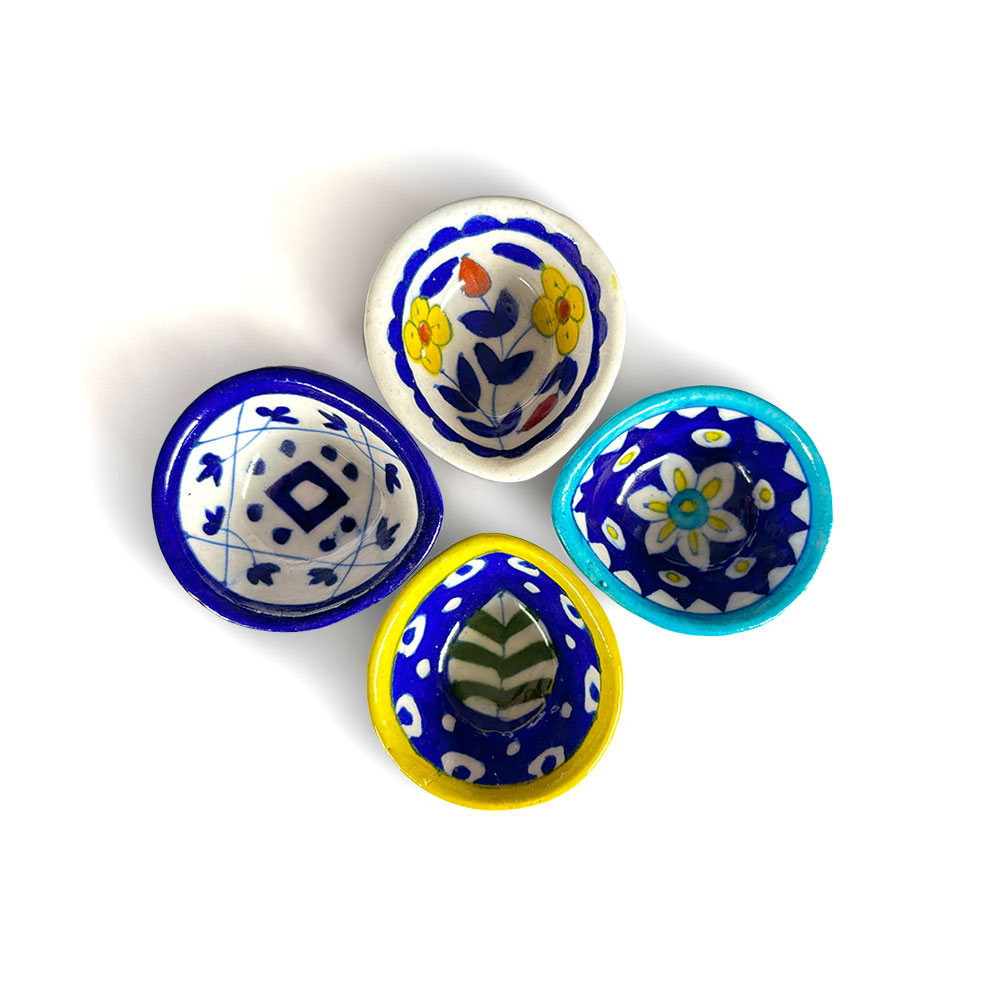
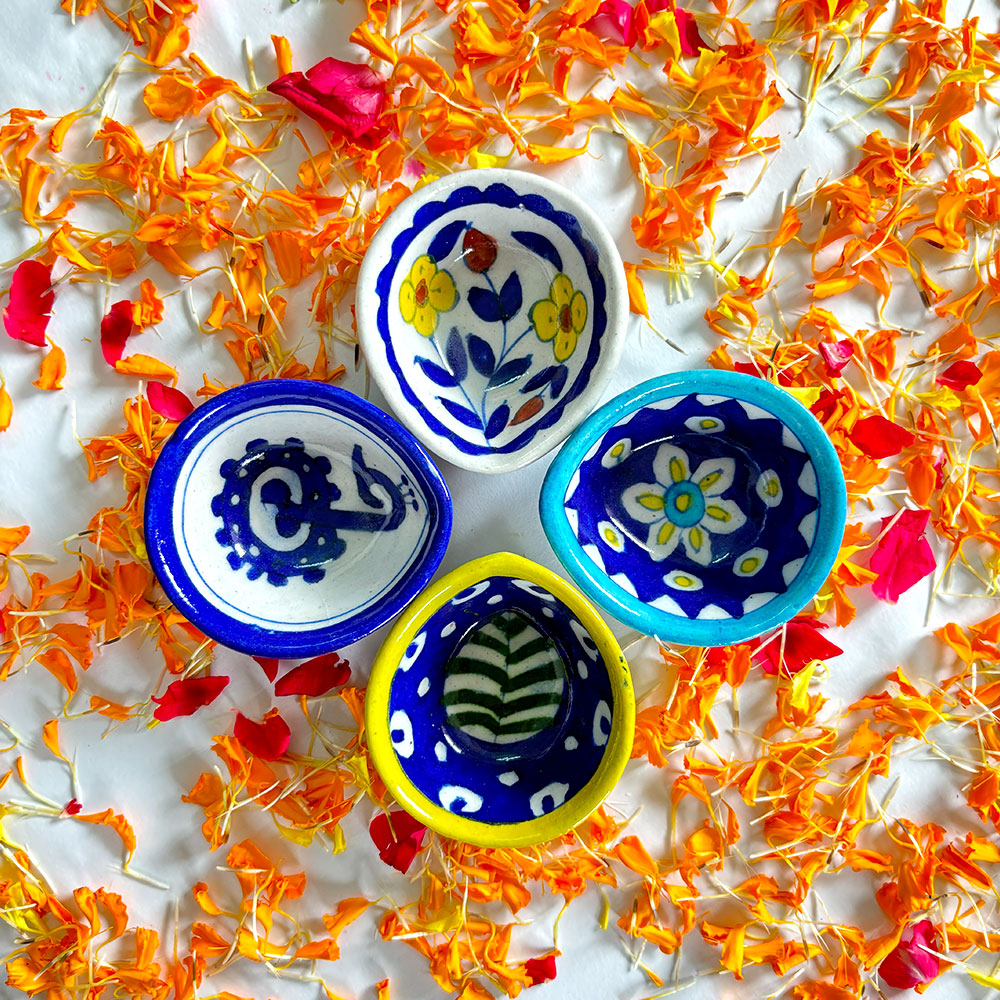
Among various traditional crafts of India, Jaipur Blue Pottery is distinguished by its unique beauty, complex hand painting, and rich history. Featuring shades of cobalt blue, turquoise, green, and white, this art form represents a symbol of artistic heritage of Rajasthan. Both palaces and modern houses adorn this type of pottery with great joy.
What makes Blue Pottery different from regular pottery is that it is not made from clay. Instead, the artisans use a special dough mixture based on quartz stone powder, glass, Multani mitti, borax, and natural gum to make the product. (Blue Pottery Making)
The History of Blue Pottery
The roots of Blue Pottery go back to Persia and Central Asia. Historians state that this unique glazing technique appeared when Mongol artists mixed Chinese techniques of glazing with Persian art of decoration. Later, the art form spread throughout Afghanistan, Mughal courts, and eventually to India in the 14th century. (Wikipedia)
Initially, blue glazing was used to decorate mosques, palaces, tombs, and other royal constructions in Central Asia and Mughal India. Then, the art form was gradually transferred to the making of pottery and spread throughout India, arriving in Delhi. At last, in the 17th and 19th centuries, it reached Jaipur where it found its artistic expression. (Handmade in Rajasthan)
There is an interesting legend about how the craft appeared in Rajasthan. It is believed that the king of Jaipur, Maharaja Sawai Ram Singh II, sent his artisans to Delhi to learn this art form. Afterwards, he began to encourage artisans to practice Blue Pottery in Jaipur.
Unfortunately, by the middle of the 20th century, the art form faced extinction because of low demand and lack of skilled artisans. However, it gained new life thanks to the efforts of the famous artist Kripal Singh Shekhawat who, together with such cultural figures as Rajmata Gayatri Devi and Kamaladevi Chattopadhyay, helped preserve this heritage.
Nowadays, Jaipur Blue Pottery is recognized all over the world and even got the geographical indication (GI) protection tag in 2006. (NABARD)
What Makes Blue Pottery Special?
One of the most unusual features of Blue Pottery is that it does not consist of any clay. Instead, artisans use a special dough made of:
• quartz stone powder,
• powdered glass,
• Multani mitti (Fuller's earth),
• borax, and
• gum and water.
The dough is shaped, dried, hand-painted, glazed, and fired at low temperatures.
The iconic blue color is obtained thanks to cobalt oxide, while green shades are achieved using copper oxide. Traditional motifs like floral vines, Mughal arabesques, birds, elephants, camels, and geometrical shapes are painted on Blue Pottery by hand.
Each piece of Blue Pottery is handmade, which means that each product is unique. According to the opinions of artisans, sometimes it takes several weeks to paint complex designs because of the complexity of the process that requires many stages of shaping, hand painting, glazing, and firing.
The Art of Making Blue Pottery
Making Blue Pottery is a difficult and lengthy process. Usually, the making of Blue Pottery consists of several steps:
-
Preparing the Dough
In the first step, artisans mix powdered quartz and glass and other natural materials into dough. -
Moulding and Shaping
Then, the dough is shaped into required forms of bowls, plates, tiles, vases, jars, knobs, and decorative items. -
Drying and Smoothing
Dried and smoothed items are taken from molds. -
Hand Painting
The artisans paint beautiful patterns on them. -
Glazing and Firing
At last, the items are glazed and fired in kilns at low temperatures.
The special feature of Blue Pottery is that it is low-fired and quartz-based, which results in its fragile and smooth look.
Blue Pottery in Modern Interior Decoration
Although Blue Pottery has a long history, it perfectly fits modern interior design. Nowadays, both homeowners and interior designers prefer to combine traditional crafts with modern styles, which is why Blue Pottery became one of the favorite decorations.
Here are several ideas of how to use Blue Pottery in your interior design:
• Decorative Wall Plates
Hand-painted blue pottery plates instantly brighten plain walls and create artistic focal points in living rooms and hallways.
• Floral Vases
Blue pottery vases paired with fresh flowers or dried arrangements add sophistication to dining tables and entryways.
• Tableware and Serveware
Nowadays, artists create tea sets, coasters, bowls, platters, and serving trays. (Handmade in Rajasthan)
• Bathroom Accessories
Blue Pottery soap dishes, toothbrush holders, and trays will decorate your bathroom.
• Drawer Knobs and Tiles
More and more people use blue pottery knobs and tiles in kitchen cabinets, wardrobes, and furniture.
• Festive and Gifting Decor
Since each piece of Blue Pottery is handcrafted, it can be a great gift for wedding or housewarming.
According to recent discussions about Indian home decoration, more and more people appreciate Blue Pottery and buy it for sustainable interiors.
Why Buying Blue Pottery Is Important
Each purchase of handmade Blue Pottery helps artisans of Rajasthan earn money. In the age of mass production, handcrafted arts play an important role in preserving the cultural heritage and traditional skills.
Jaipur Blue Pottery is not only a beautiful craft but also a history of migration, royal patronage, revival, and human creativity. Each hand-painted pattern embodies many generations of knowledge accumulated by artisans.
With the emergence of interest in handmade arts in modern interiors, Jaipur Blue Pottery continues to evolve and develop keeping all of its traditions.




0 comments